
Loading...
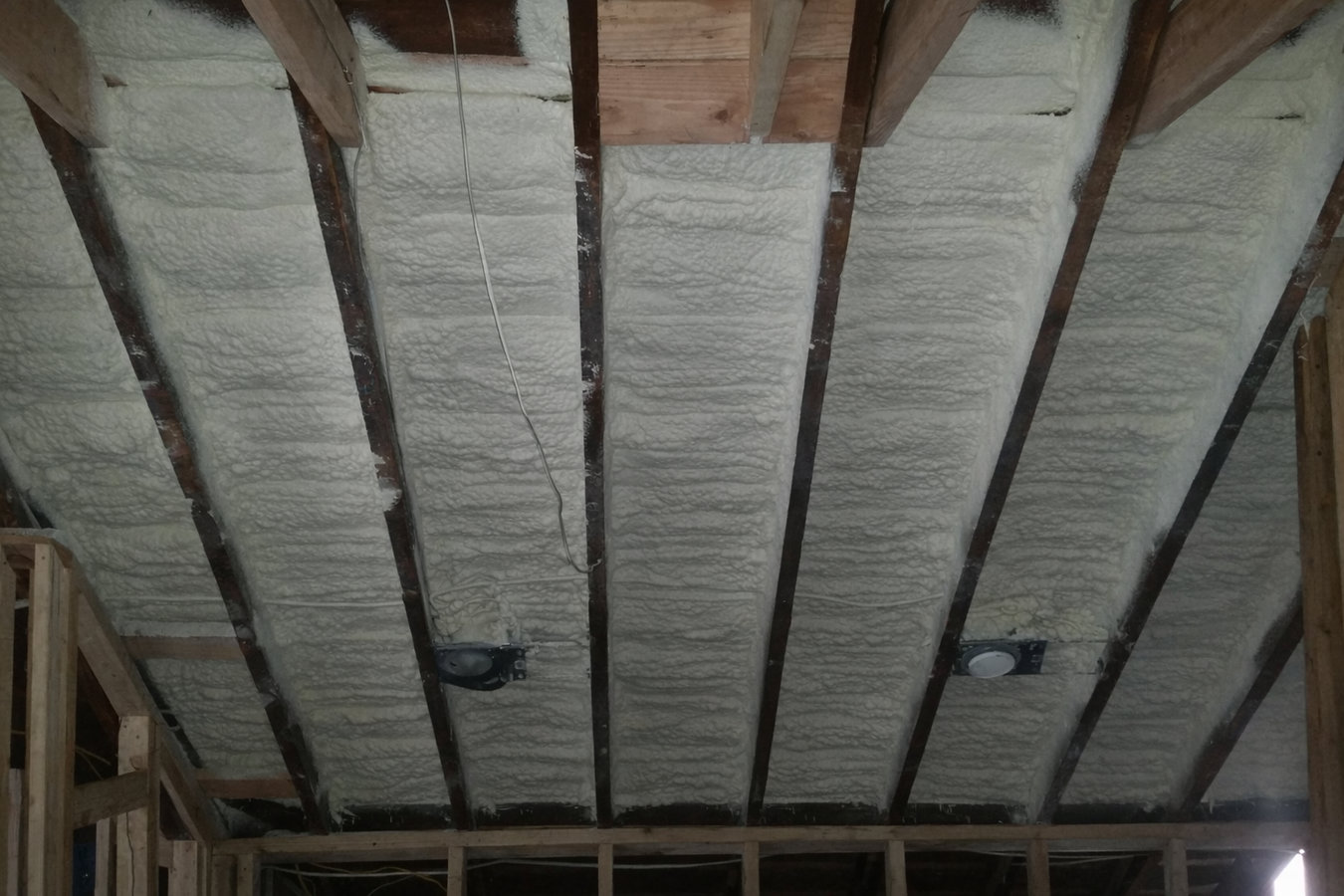
One application seals air gaps and insulates at the same time. Drier crawl spaces, warmer floors, and lower energy bills - all from a material that lasts the life of your home.
Closed cell spray foam insulation in Danville gets sprayed as a liquid, expands into a firm, dense barrier within seconds, and creates both an insulation layer and an air seal in one application - most residential jobs covering a crawl space or attic are completed in half a day to a full day. Unlike fiberglass batts, which only slow heat transfer, closed-cell foam stops air movement entirely. That matters in Danville's climate, where heat and humidity find every gap they can.
Closed-cell foam insulation in Danville homes is most often applied in crawl spaces, basement rim joists, and attics - the spots where air and moisture move in and out most freely. In older Danville homes, it fills the kinds of irregular gaps around framing and pipes that other materials simply cannot reach. Many homeowners pair this service with spray foam insulation when covering multiple areas of the home at once.
One important detail: plan to be out of your home for at least 24 hours after installation. The foam produces fumes while curing that require your family and pets to stay elsewhere until it is fully hardened. Once cured, it is safe and requires no ongoing maintenance.
If your heating and cooling costs keep climbing year after year but your usage habits have not changed, air leakage is often the culprit. Danville's hot, humid summers and cold winters put constant pressure on homes that are not well sealed, and older homes in particular tend to lose a lot of conditioned air through the attic and crawl space. Bills that feel out of proportion to your home size are a reliable signal something is escaping.
In Danville's older neighborhoods, many homes sit over uninsulated or poorly sealed crawl spaces. If your floors feel noticeably cold in January or you catch a damp, earthy smell coming up through the floorboards, moisture and cold air are likely moving freely through your crawl space. This is one of the most common and fixable problems closed-cell foam addresses in this part of Virginia.
If one room is always too hot in summer or too cold in winter no matter how you adjust the thermostat, that room likely has an air sealing or insulation problem. This is especially common in rooms above garages, at the ends of older homes, or in spaces with exterior walls that were never properly insulated. The temperature difference you feel is a reliable sign that conditioned air is escaping somewhere nearby.
If you have ever looked into your attic or crawl space and noticed gaps around where pipes, wires, or ducts pass through the framing, those openings are letting air move freely in and out of your home. You do not need a contractor to spot this - a flashlight and a few minutes is enough. Even small gaps add up to significant energy loss over the course of a year, and closed-cell foam fills those irregular shapes in a way batts cannot.
We apply closed-cell foam most commonly in crawl spaces, basement rim joists, and attics - the three areas where Danville homes lose the most energy and let in the most moisture. In crawl spaces, we spray the walls and rim joists to stop ground moisture from rising into your floor structure. For attics being converted to conditioned space or brought under the building envelope, foam on the underside of the roof deck eliminates the attic as a heat source in summer. Our full spray foam insulation service covers all of these scenarios and more.
For homes where the crawl space is being addressed, we often pair closed-cell foam with open-cell foam insulation in interior wall cavities or unvented attic spaces where sound dampening and lower density are acceptable. The right combination depends on your specific home, your goals, and your budget - all of which we work through with you during the estimate visit.
Best for Danville homes with vented or unencapsulated crawl spaces where moisture and cold air are the main problems.
Suits attics being converted to conditioned storage or living space, or where ductwork runs through an unconditioned attic.
Ideal for older homes with drafty, uninsulated rim joists that let cold air into the first-floor framing every winter.
For homes undergoing siding replacement or major renovation where exterior walls are open and spray foam can be applied before sheathing goes back on.
Danville sits in a mixed-humid climate zone, which means your home has to work hard in both directions - keeping heat out in July and keeping it in during January cold snaps. That back-and-forth stress on your walls, attic, and crawl space makes a tight air seal especially valuable here. Spray foam insulation handles both heating and cooling seasons well, because it stops air movement entirely rather than just slowing heat transfer. For homes in Danville's older neighborhoods - particularly around Schoolfield and Holbrook-Ross - where walls and foundations have had decades to develop gaps and cracks, this is often the most effective fix available.
A large share of homes in Danville and the surrounding Piedmont area were built before the 1980s, many of which were constructed before modern insulation standards existed. These homes often have uninsulated crawl spaces, drafty rim joists, and attics with little to no air sealing. For homeowners in these older neighborhoods, closed-cell foam can make a dramatic difference because it fills the kinds of irregular gaps and cracks that other insulation materials simply cannot reach. We work throughout Eden, NC and Martinsville, VA, where many homes share the same crawl space construction and older housing stock challenges.
When you reach out, we will ask a few basic questions about your home and what area you want insulated. From there, we schedule a time to come out and take a look in person. We typically reply within one business day - you do not need to know anything technical before making that first call.
A contractor walks through the areas you want insulated - usually the attic, crawl space, or rim joists. They check existing conditions and measure the space, then provide a written estimate that breaks down cost by area. If a permit is required, we handle pulling that and factor it into the estimate.
Clear the work areas and arrange a place for your household - including pets - to stay for the night after the job is done. The foam needs at least 24 hours to cure before you return. Your contractor will give you a specific list of what needs to move before the crew arrives.
The crew arrives with their spray equipment and applies the foam in controlled passes. A typical crawl space or attic job takes half a day to a full day. Once the foam has cured and you are back in the home, we walk you through the finished areas so you can see the coverage yourself and ask questions on the spot.
We will come out, assess the areas you want insulated, and give you a written estimate with no obligation to move forward. Most replies within one business day.
(434) 425-0970Spray foam requires hands-on experience to apply correctly - consistent thickness, proper masking, and the right equipment maintenance all affect how the finished product performs. We complete spray foam jobs regularly throughout Danville and the surrounding Southside Virginia area, which means the crew showing up to your home has seen your type of crawl space or attic before.
Danville's pre-1980s housing stock - with its crawl spaces, uninsulated rim joists, and irregular framing - makes up a large share of the jobs we do. We know what to expect when we open a crawl space hatch in one of these older neighborhoods, and we do not treat a 1940s home like a newer build. That experience means the solution is matched to your actual home, not a generic quote.
You will see a written estimate before any work begins, a walkthrough of the finished work before we leave, and clear guidance on what to expect during the curing period. We handle any required permits through the City of Danville building office - you do not navigate that process on your own. No surprise charges at the end.
Virginia has a statewide building code that sets minimum standards for insulation and energy efficiency in residential construction. We work to those standards on every job. The Spray Polyurethane Foam Alliance is the main trade organization for this type of work, and following their installation guidelines is part of how we ensure consistent quality across every job.
When you work with Danville Insulation, you get a contractor who knows Danville homes, understands what closed-cell foam can and cannot do, and does not oversell applications that do not make sense for your specific situation.
A lighter-density spray foam that excels at interior sound control and larger open areas like attic floors.
Learn moreFull spray foam services covering both closed-cell and open-cell applications throughout your home.
Learn moreFall is the busiest season for spray foam work in the Danville area - lock in your installation date before the schedule fills up.