Loading...
Stop heat from escaping through your foundation. Your first floor stays warmer, your furnace runs less, and your home feels the way it should.
Basement insulation in Danville slows the movement of heat between your living space and the cold, damp air below it - most jobs on a standard home are completed in one to two days. Without it, warmth escapes through your floor in winter and cool air leaks out in summer, making your heating and cooling system work harder than it needs to. The result is higher energy bills and rooms that never quite feel comfortable.
Basement insulation in Danville homes is typically installed in one of two places: on the walls of the basement itself, or on the ceiling above it - meaning the underside of your first floor. Which approach works better depends on whether your basement is finished or unfinished, how you use the space, and whether moisture is a concern. Many homeowners also combine basement work with crawl space insulation when their home has both below-grade spaces.
If your basement has any history of water seeping in, that problem needs to be fixed before insulation is installed. Trapping moisture behind insulation leads to mold, rot, and damage that costs far more to fix than the original leak. A good contractor will check for moisture signs during the assessment and tell you honestly if waterproofing work needs to come first.
If you walk across your first floor on a cold day and the floor feels noticeably cold - especially near the center of the house, not just by exterior walls - heat is likely escaping through an uninsulated basement ceiling below you. This is one of the most common complaints from Danville homeowners in older homes, and it is a direct sign that the basement is pulling warmth out of your living space.
Danville's humid summers create conditions where moisture collects on basement walls and floors. If you smell something musty or damp when you open the basement door, that moisture is already present - and it will get worse if insulation is added without addressing it first. This signal means you need both a moisture check and an insulation assessment before moving forward.
If your energy bills have risen over the past few years and you have not changed your habits or equipment, an under-insulated basement is one of the most likely culprits. Heat escapes downward in winter and enters from below in summer, and your system has to compensate. Many Danville homeowners in pre-1980s homes are paying significantly more than they need to for this reason.
If you walk into your basement and the walls are plain concrete block or poured concrete with nothing covering them, your basement almost certainly has little or no insulation. This is extremely common in Danville's older neighborhoods. Bare walls are not just a comfort issue - they are a direct path for energy loss and moisture infiltration year-round.
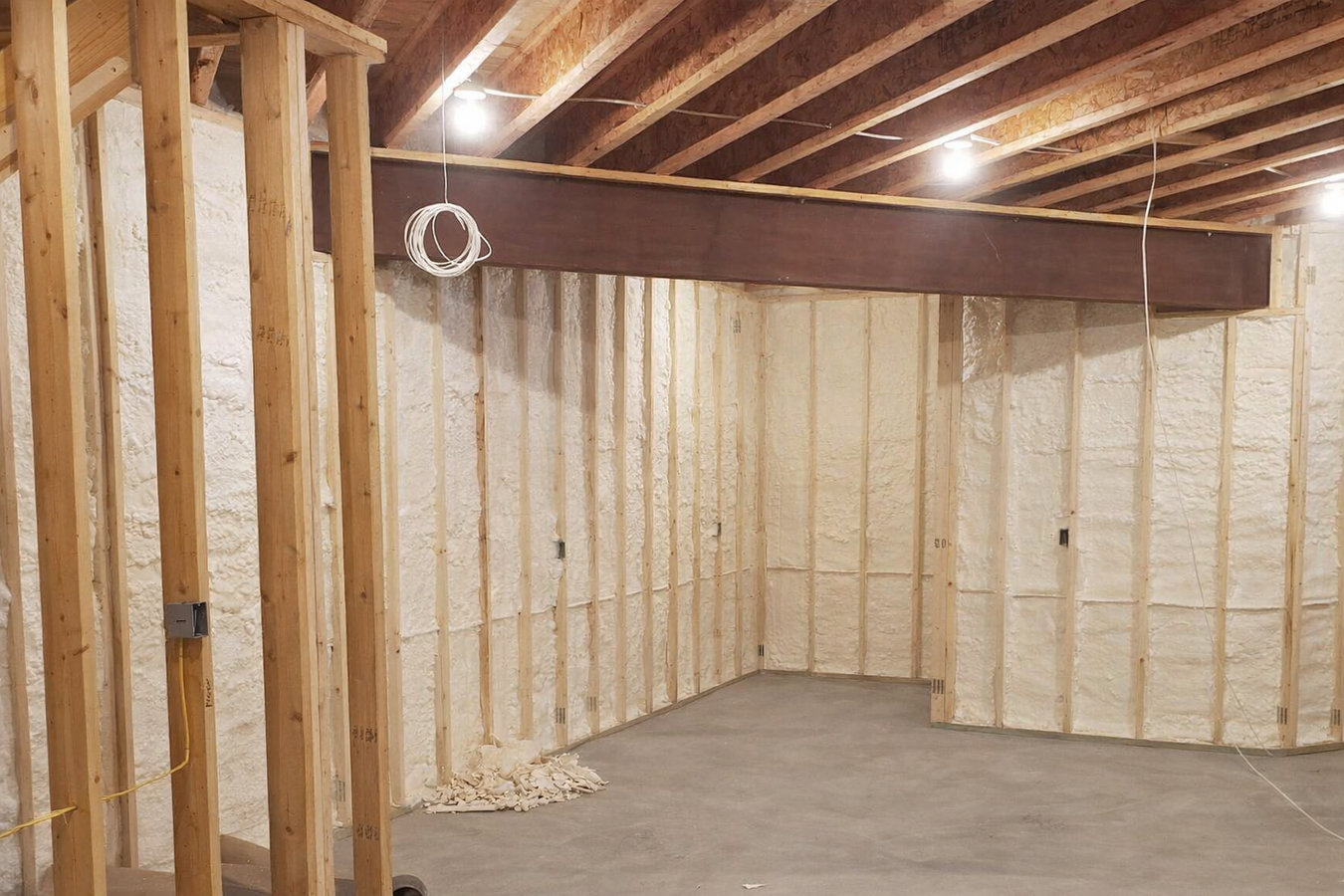
For most Danville basements, we install insulation on the walls rather than the ceiling - this makes the basement warmer and reduces the risk of frozen pipes while keeping your first floor comfortable. We use closed-cell foam insulation on the walls when moisture control is a priority, since it creates a vapor barrier and air seal in one step. For finished basements or homes where ceiling insulation makes more sense, fiberglass batts fit cleanly between floor joists above the basement.
We also handle crawl space insulation for homes where the basement transitions into a crawl space or where both spaces need attention at the same time. Every project starts with a moisture assessment - we do not insulate over a damp wall, because that just creates a mold problem you will pay for later.
Best for unfinished basements with moisture concerns - creates an air seal and vapor barrier in one application.
Suits finished basements or situations where the basement stays cold and the goal is to insulate the floor above.
Works well when a basement is being finished and framing will be added over the insulation for drywall.
Ideal for homes with both spaces - addressing both in one visit cuts coordination time and overall project cost.
Danville sits in a climate zone where winters are cold enough to drive significant heat loss through an uninsulated basement, and summers are hot and humid enough that moisture and heat gain become a real problem. That two-way pressure means basement insulation is not just a winter upgrade - it helps year-round. A contractor familiar with this region will know how to balance both concerns rather than treating it as a simple cold-weather fix.
Danville has a large share of homes built before the 1980s, when insulation standards were much lower or nonexistent. Many of these homes have basements with bare concrete walls and no insulation at all under the first floor. If your home was built before 1980, there is a good chance your basement is a significant source of energy loss - and the improvement from adding insulation will be more dramatic than in a newer home. We work throughout Martinsville and Rocky Mount, where the same patterns hold true.
You call or submit a request online, and we typically get back to you within one business day to schedule a time to come out and look at the space. You do not need to know anything technical before this call - just be ready to describe roughly how big your basement is and whether you have noticed any moisture or water issues.
A contractor visits your home and walks through the basement with you, checking the current state of the walls and ceiling, looking for signs of moisture, and measuring the space. This visit usually takes 30 to 60 minutes, and a good contractor will explain what they find in plain language before they leave.
Within a few days, you receive a written estimate that breaks down the cost of materials and labor. If moisture work or air sealing is recommended before insulation, that should be listed separately so you understand what each part costs. You will also get clear instructions on preparing the basement - mainly clearing stored items away from walls.
The crew arrives with equipment and gets to work. Most basement insulation jobs are completed in one day, though larger basements or more complex work may take two. Before the crew leaves, ask them to walk you through the finished work so you can see it yourself - a good contractor will point out what was done and answer any questions on the spot.
We will assess your basement, give you a written estimate, and explain your options with no obligation to move forward. Most quotes within one business day.
(434) 425-0970In Danville's humid climate, insulating over a damp basement wall is one of the most expensive mistakes a homeowner can make. We assess your basement for moisture before a single piece of material goes in - so you are not paying to create a mold problem down the road. That assessment is part of every estimate visit.
A large share of our work is in homes built before 1980, where basements were never insulated to begin with. We understand the specific challenges that come with older construction - bare concrete, irregular wall assemblies, and the moisture patterns that come with age. That local experience means the solution you get is matched to your actual home.
You get a written estimate that breaks down every cost upfront - no vague line items, no add-ons that appear after the crew shows up. If your project requires a permit through the City of Danville Building Inspections office, we handle the paperwork and coordinate the inspection. You do not need to know the process, because we do.
We pull the permits your basement project needs and coordinate the city inspection so the work is checked and on record. We document the conditions before and after, so you have a clear account of what was done and can point to it if you ever sell or refinance your home.
When you work with Danville Insulation, you are working with a contractor who knows Danville homes, understands the local climate, and treats every basement like it is the one under our own house.
Dense spray foam that seals air leaks and provides a moisture barrier in one step.
Learn moreSeal and insulate your crawl space to stop cold floors, drafts, and moisture intrusion.
Learn moreDanville winters are coming - lock in your installation date before the cold sets in and the schedule fills up.