Loading...
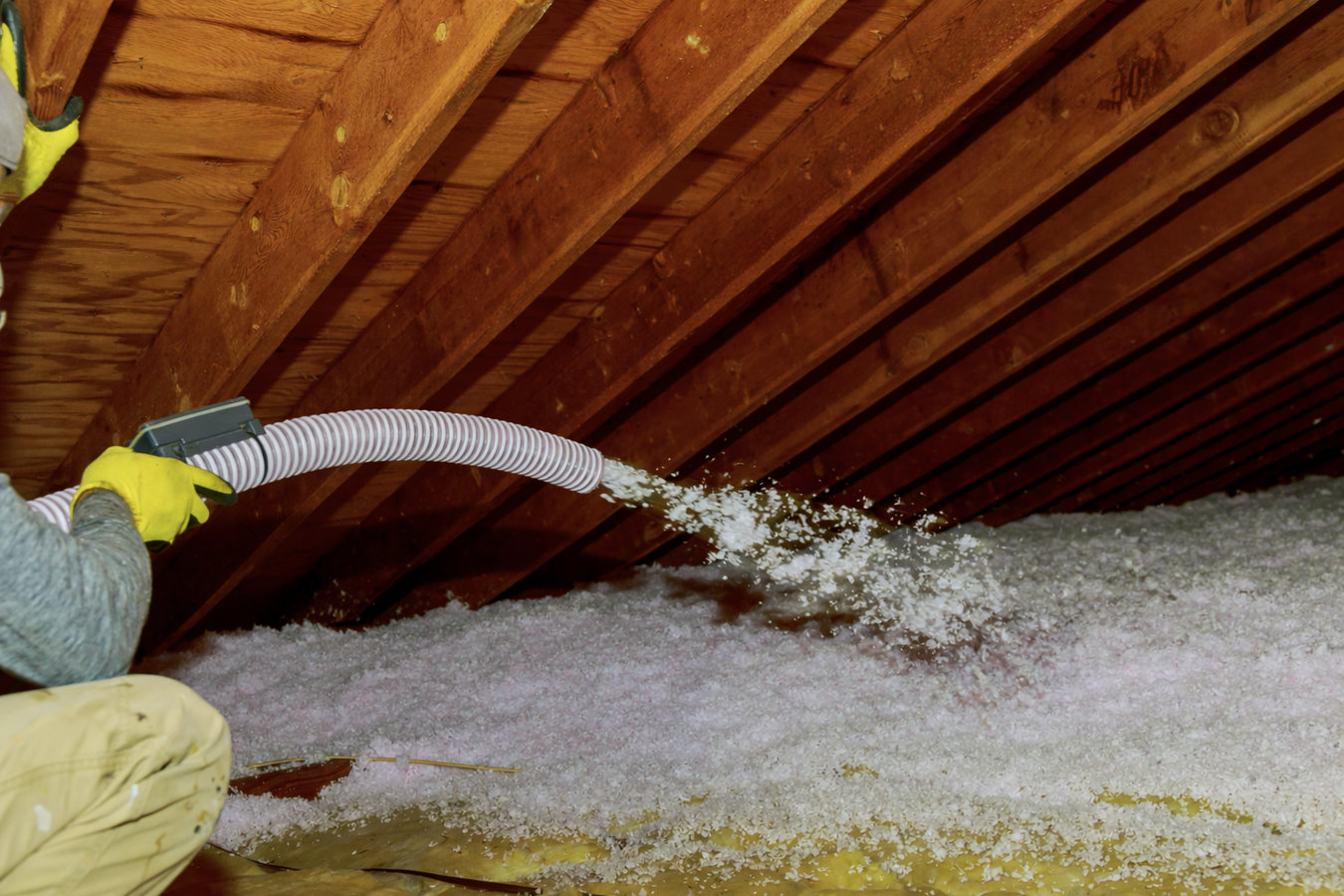
Older Danville homes were built when insulation standards were much lower. Blown-in insulation fills the gaps those homes still carry, cutting energy waste and making every room feel more consistent through Virginia summers and winters.
Blown-in insulation in Danville fills attic cavities and wall spaces with loose-fill fiberglass or cellulose, building a thermal layer that slows heat movement in both directions - most jobs are completed in a single day with no need to leave your home. This method works especially well in older homes because the material flows into irregular spaces and around obstructions that batt rolls simply cannot reach. If you have noticed rising energy bills or rooms that never quite reach the right temperature, an under-insulated ceiling is almost always part of the story. For homeowners who also want to look at wall and floor coverage at the same time, our home insulation service evaluates the full picture in one visit.
The difference between a good blown-in job and a rushed one comes down to what happens before the material goes in. A quality contractor air-seals every gap first - around light fixtures, plumbing lines, and attic wall tops - because those are the spots where conditioned air silently escapes. Skipping that step is the most common shortcut in the insulation industry, and it is why some homeowners get new insulation installed and still feel no difference in their bills.
The U.S. Department of Energy recommends attics in Virginia reach R-38 to R-60. Read the DOE guidance on insulation R-values.
If your electric bill spikes sharply when Danville's summer heat arrives and again during January cold snaps, your attic insulation is likely the culprit. Heat moves toward cold in both directions - in summer it pushes down through your ceiling, and in winter it escapes upward. Thin insulation cannot slow that movement enough to make a difference.
In Danville's July and August heat, a well-insulated attic acts as a buffer between the sun-baked roof and your living space. If your second floor or rooms directly under the attic feel stuffy and hard to cool even with the AC running, that is a strong sign the insulation above is not doing its job.
If you peek into your attic and can clearly see the wooden beams running across the floor, your insulation has either settled significantly or was never adequate to begin with. Healthy blown-in insulation should be deep enough that the joists are fully buried - this is the easiest check a homeowner can do themselves.
Drafts coming from outlets or light switches on interior walls are a sign that air is moving through gaps in your attic floor and down through wall cavities. This is especially common in older Danville homes with balloon-frame construction, where wall cavities run continuously from the basement to the attic.
We install both fiberglass and cellulose insulation blown-in, choosing the right material based on your attic layout, moisture history, and what will deliver the best long-term result. Fiberglass blown-in is lighter and resists settling over time, making it a strong choice for standard attic applications. Cellulose is denser, fills tight and irregular spaces more completely, and has a smaller environmental footprint - it performs especially well in the crawl-heavy, pre-1970 homes that are common across Danville. Every job starts with an attic walk-through so you know which material fits before any decision is made.
Beyond the attic, blown-in material can also be installed into existing wall cavities through a drill-and-fill method - no siding removal required. Homeowners who want a fuller assessment of their home's entire envelope can pair this with our attic insulation service for a dedicated attic focus, or our home insulation service to address every part of the home at once.
Best for homes with standard attic layouts where long-term settling resistance matters most.
Best for older homes with irregular cavities and homeowners who prefer a recycled-content material.
Best for existing homes that need wall coverage without removing siding or opening up walls.
Best for any home where energy savings are the primary goal - this step precedes every blown-in job we do.
Danville sits in a mixed-humid climate that delivers real heat from June through September - average highs in July regularly push into the low 90s - and cold snaps in January that drop overnight lows into the mid-20s. That means your insulation is working hard in both directions all year. Neighborhoods like Schoolfield, Holbrook, and Green Street are filled with homes built in the 1940s through 1970s that were finished with little to no attic insulation by today's standards. Whatever was originally installed has long since settled and lost much of its effectiveness. If your home was built before 1980 and has never had insulation work done, there is a strong chance you are losing conditioned air through the ceiling every single day.
Danville summers also bring high humidity that can cause moisture problems in poorly ventilated attics if insulation is added without checking the space first - this is why our attic assessment always happens before any material goes in. Homeowners in Martinsville, VA and Eden, NC face the same climate pressures, and we serve both communities regularly.
We respond within 1 business day. Our team asks a few quick questions about your home's age and what has been bothering you most - high bills, uncomfortable rooms, or visible insulation problems. Most Danville homeowners get an assessment scheduled within a week or two.
Before quoting anything, we go up into your attic. We check existing insulation depth, look for moisture or roof leak signs, review attic ventilation, and identify where air-sealing gaps are. This visit takes 20 to 30 minutes and costs nothing.
You receive a written quote covering air-sealing, insulation type and depth, and any prep work needed. We tell you upfront whether a permit is required. There is no pressure to sign on the spot, and getting a second quote is completely reasonable.
Our crew air-seals gaps first, then fills your attic to the agreed depth. For most Danville homes the actual blowing takes one to three hours. When done, we show you the depth achieved from the attic hatch so you can verify the work yourself.
We respond within 1 business day - no obligation, no pressure. After you reach out, someone from our office will call to schedule a free on-site estimate at a time that works for you.
(434) 425-0970Danville Insulation has worked in Danville since 2023, including the older neighborhoods in Schoolfield, Holbrook, and Green Street where many homes were built in the 1940s through 1960s. We know what the housing stock here actually needs - not a generic approach borrowed from a bigger city.
Most contractors skip air-sealing to save time. We do not. Every blown-in job starts with sealing penetrations, light fixture gaps, and attic wall tops, because insulation without air-sealing leaves real money on the table for the homeowner.
The Department of Energy recommends attic insulation between R-38 and R-60 for homes in Virginia. We measure what you have, calculate what is needed to hit that target, and install to that level - not just enough material to quote a low number.
We provide the written completion documentation you need to claim the federal tax credit - up to 30% of qualifying costs. We also walk you through whether Dominion Energy rebates apply to your project before we start, so no savings get missed.
Every one of these points comes back to the same thing: we do the job the way it should be done, not the fastest way. Homeowners who call us once tend to call again for the next project, and they send their neighbors our way.
The Cellulose Insulation Manufacturers Association provides independent guidance on cellulose material quality and installation standards that we follow on every job.
A whole-home insulation assessment that covers attic, walls, and crawl space together for the most complete result.
Learn moreDedicated attic insulation service that pairs air-sealing with new material to stop heat loss right at the top of your home.
Learn moreDanville summers and winters both stress under-insulated homes - reach out today and we will schedule your free estimate within the week.